A year ago these youngsters and many others wouldn't care to talk about politics....I mean what happened...It's simple....Here's my pick...
I wanted to write this post right after watching Obama's speech at DNC but because of an extended deadline, a labor day weekend at six-flags and an informal talk at Penn, I am writing it now.
A few months ago, when some of my friends asked my opinion about presidential candidates and whom I would support, I said I don't follow politics. If I have to answer I would depend on opinions of those who I look up to since at least I know who I choose to look up to. And the answer was Obama as his name was resonating in academia.
But see Obama's exceptional performance is drawing so many's attention to politics and making many others to actually recheck their stand in politics: excellence by definition attracts interest of many people. I have a strong liking to the foundational concepts of this country and his speeches and especially his speech at DNC 2008 renewed my beliefs in the concept of America. He is really self-critical and is basing his entire campaign on the bedrock principles and ideals of this country. As I mentioned about year and half ago self-criticality is a necessary (but not sufficient) quality that any leader should have. Scott also rightly mentions here that "Any worldview that isn’t wracked by self-doubt and confusion over its own identity is not a worldview for me."
People who are undecided or think McCain is not bad and Obama cannot be as good as he sounds should keep the following in mind. See it's easy to argue that McCain is not totally bad because generally no republican is completely bad, of course they love this country very much. The resistance to choose Obama has an analogue to that faced by "reason" in struggle between Church and Science. And further more why is it that talking big should prohibit him from doing big things. He is talking big not because he is not aware of "realities" but rather he actually understands the current realities and realizes they have to change to keep the true American concept alive. Of course he is not all powerful and has limitations but that's no reason to risk not choosing him. The question to be asked is not whether he can solve all the problems but whether he can renew the politics so that it is back on track to be able to solve real problems in a responsible, accountable and democratic way. He certainly seems to have a great potential to do such things. The very fact that he became a presidential nominee of a big party proves it. "Inexperience" is only an excuse that is so unamerican because when America was formed wasn't it the wildest experiment to declare a real independent country against the will of the greatest empire with a strong hope in democracy? The founding fathers did not have "experience" in declaring independent countries, right?
Usually I would like to identify and associate myself with those who have similar values which happen to be being self-critical, open-minded, challenging perceptions from time to time, thinking for greater good etc. etc. Hence even though I am technically not American caring for this country is a high-level goal in my life. Prayer can have "positive entanglement effects" and hence I urge everyone to pray and urge everyone you know to pray for his victory. Of course those who have right to vote must and should vote for Obama. Furthermore who can do even more sophisticated game-theoretic practices please checkout this for Nadertrading etc.
Tuesday, September 02, 2008


Saturday, August 23, 2008
Gain from Obama campaign
Lately, I have been increasingly gravitating towards following Obama's talks in his presidential campaign. Needless to say his speeches are very enticing. His audacious "walk-through reasoning" approach is quite refreshing and rigorous and can stimulate lot of ordinary people to improve their efficiency in dealing with their day-to-day issues. He clearly stresses on a contest based on relevant observables and merit based on policies instead of fighting on something personal and irrelevant. Sounds like a computational guy to me. Alan Turing (a Computer Science hero) argued something like this on defining artificial intelligence and you can see a nice post on it by Scott here.
Now this is very refreshing to see a politician with such perspectives. A lot must be learnt from him by politicians in India and probably all around the world. To contest based on reason with rigor avoiding "easy" and "nasty" tricks is no simple task. In his interview at Google last year one of the audience asked him what he had learnt from past democrat candidates who lost the elections, he said the main mistakes were that they were not clear of what they stood for and hence became defensive when they were attacked and actually sounded like their opponents. Being clear and honest and courageous and rational all go together. It's takes a holistic approach to be rigorous and effective in getting things done.
He admits he may not be perfect and may make mistakes but will make his government very transparent that can actually unleash the true power of democracy. His repeated indications that a democratic government's success is measured by the standard of living (including freedom) of majority of the population show his strong understanding of the fundamentals. There will always be ordinary and extraordinary people in the world at any given point of time. It's the self-justified goal of humanity that the quality of life of all humans should increase. Simply speaking it should be ordinary that ordinary people should be able to dream, strive and hope to be extraordinary while pushing the bar being of extraordinary to next level. He is a great example to show subtle differences between idealism and extremism, between fundamentalism and being strong in fundamentals, between having true high-level knowledge and hand-waving.
For me Scott:Computer Science :: Barack::Politics. Scott's core love for science, his results and his talent in presenting the results and Barack's core love for democracy and his talent in pooling people together are truly truly awesome. I truly wish (unfortunately I cannot vote this time, not being a citizen) that he wins but we surely can gain a lot just from his campaign.
Monday, August 18, 2008
Democrats and republicans
I have not been following the US presidential campaigns closely but lately I have been listening to some speeches by Barack Obama (thanks to my brother, Ganesh's enthusiasm in his speeches).
Just yesterday I listened to his (only part1) and John McCain's interviews with Rick Warren on CNN videos. Both speeches were good and clearly represented their parties' ideals. McCain's answers were short and clear while Obama's were long and complex. This was apparent starting with response to simplest questions like "State three wise men you would seek advice from" to complex issues like "Abortion". McCain's answers reflected gradient descent type approaches while those of Obama did MCMC type. No doubt both parties are dedicated to USA's growth and its benefit to the world. Both greedy deterministic approaches and probabilistic approaches have advantages and disadvantages depending on problem space: distribution of the problem instances. The main challenge in deciding whom to vote iswhat is to clearly understand the current problem instance and intelligently choose the better strategy. As is evident from the history republican strategy works most of the times. This is true in many optimization problems: gradient descent, though a local optimizer works in many many practical cases. But in hard cases when we need real "landscape shifts" in searching for the solutions we stand a better chance with probabilistic and "holistic/global" approaches. Such approaches tend to be computationally hard and require cleverer design of algorithms for feasibility.
Citizens of USA have been smart enough to choose Democrats a few times but I hope they realize this is one of those times again.
Just yesterday I listened to his (only part1) and John McCain's interviews with Rick Warren on CNN videos. Both speeches were good and clearly represented their parties' ideals. McCain's answers were short and clear while Obama's were long and complex. This was apparent starting with response to simplest questions like "State three wise men you would seek advice from" to complex issues like "Abortion". McCain's answers reflected gradient descent type approaches while those of Obama did MCMC type. No doubt both parties are dedicated to USA's growth and its benefit to the world. Both greedy deterministic approaches and probabilistic approaches have advantages and disadvantages depending on problem space: distribution of the problem instances. The main challenge in deciding whom to vote is
Citizens of USA have been smart enough to choose Democrats a few times but I hope they realize this is one of those times again.
Monday, July 21, 2008
Streaks of thought: Streak 20
There is a simple difference between having multiple personalities and having multiple personality disorder. All superheroes like Batman (The Dark Knight is awesome: super entertainment package that appeals most), Spiderman, Superman etc. have multiple personalities that they maintain in an orderly fashion. It's when they cannot handle them in order that they run into trouble.
Many of us also have several moods. Having moods is not a bad thing (in fact if we don't have moods life becomes trivial) but having them out of order is not desirable with limited resources around. Mood distribution and personality of a person are correlated. Having strong moods gives you some sort of extra strength but "strong moods come with strong responsibilities".
Many of us also have several moods. Having moods is not a bad thing (in fact if we don't have moods life becomes trivial) but having them out of order is not desirable with limited resources around. Mood distribution and personality of a person are correlated. Having strong moods gives you some sort of extra strength but "strong moods come with strong responsibilities".
Sunday, July 20, 2008
Faith in machines
In many of my previous posts I stressed, efficiency and local perspectives. Such emphasis can be traced back to faith in machines which reflects the faith of theoretical computer science community that polynomial amount of resources is efficient while exponential is not.
I love studying machines as the results can so much help understand ourselves (modulo communicable understanding). Computer Science provides a nice unified way for studying machine characteristics. This reminds me I have to finish one of my posts on language of thoughts :) It has a rough precursor which I posted about 2 years ago.
Practical and efficient statistics relies on Bayesian and Markovian principles which allow principled way of working by understanding limits of machines. It's amazing to know that lot of lower bound results in complexity theory and almost entire applied statistics can be traced back to the contributions of Markov brothers! All the extensions are non-trivial but behind the non-trivial efforts of later generations was the motivation based on faith in practicality or in more crisp words, machines.
Monday, July 14, 2008
Streaks of thought: Streak 19
For a country to be a dream of many, it has to build and evolve a system that can foster hope so that a common person becomes courageous enough to work towards her/his dreams without requiring her/him to handle exponential amount of resources on tangential problems. Basically it should be able to breed dreams efficiently. America has been doing a really great job in this regard.
Friday, July 11, 2008
Importance of being normal
In my previous post I discussed how variance in abilities and needs in a local neighborhood is necessarily a result of efficient resource management by Nature for sustenance of life. Then how change is essential to keep the variance (multiple hypotheses) over time to avoid getting stuck in local optima. I also mentioned that being around normal value is important.
In statistics filtering is a problem of estimating posterior of a random variable given observations correlated with the variable over time. Life can almost be treated as a random variable with some moments. In a more global perspective it's hard to characterize these moments and hence the posterior is usually represented using just random samples. I had a related post about six months ago. But our lives are mostly dominated by local perspectives. Actually if we had true global perspectives all the time we would be super natural!
In statistics a very popular technique of estimating a complex non-linear probability distribution of a random variable is non-parametric kernel density estimation. Intuitively it says that any complex distribution can be approximated using sum of Gaussians (or normal distributions). Let's say if we can track these individual Gaussians then we automatically track the overlaying complex distribution. Kalman filters are useful when the Gaussians undergo linear changes that is the mean and variance of the Gaussian only undergo linear transformations. For reasonable non-linear changes there are linear approximations resulting in extended Kalman filters. But for highly non-linear transformations the approximations made in extended Kalman filters are not good enough. Hence people developed unscented Kalman filter which is a combination of sampling based and closed form trackers. The key elements in unscented Kalman filters are the a set of sample around the mean of the distribution. These "sigma points" are the ones that undergo non-linear transformations which can then lead to recovering the necessary moments! See it's quite important to be around the normal distribution especially in the era of highly non-linear changes to actually "participate/contribute" in successful propogation of moments.
Sunday, July 06, 2008
Need for change
Most of us agree that change is important yet hard. All of us can understand the benefits of change but the reason it seems hard is partly not having an "causal understanding" of why it is important. In this post I try to analyze why change is necessary for our survival. For that first I generalize the perspective of change to be more than just variance in temporal dimension of life. This means change characterizes any variance in the needs in any of our effective neighborhood. For e.g. it could be variance in the tastes of your roommates or variance in the goals of your friends etc. Having this generalized perspective, as I will try to argue, helps to see that variance in temporal dimension is not much harder than issues like tolerances etc. and that variance is essential.
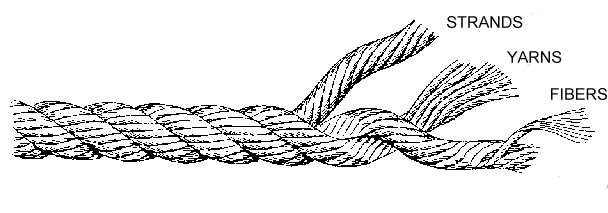
Let's see why we need variance in the first place. There is high correlation between the composition of various chemicals in the body to the personalities and behaviors we manifest. Nature which has limited resources. For life to be persistent it is important that life can sustain on variety of resources so that Nature can efficiently "refill the resources". Based on the refilling abilities of Nature our bodies evolved to incorporate variance in the needs. We are not that variant in terms of needs for oxygen for e.g. since Nature seems to be very efficient in that resource regeneration. Hence the variance in our needs can be roughly traced to the variance in the availability of resources in our Natural neighborhood. Since Nature cannot handle all (varied) needs of all the life in a global way efficiently it decentralizes need fulfilling activities into the life forms itself. In other words the body chemical compositions are evolved in such a way as to locally have a cycle of supply and demand: starting from the most obvious examples, some are male, some are female, some have strong feelings about environment, some have strong feelings about high energy colliders creating black holes (see here), some are interested in making money, some are interested in education, some are spiritual, some are materialistic, some are good in theory, some are good in practice etc. etc. So to summarize we can think of local variances in needs is an efficient design of Nature for long-term sustenance of life. Something like: For a rope to be strong the individual fibers and yards and then strands have to be intertwined with friction among them. One other important thing with variance is that variance has to be "normal" locally so as to have the benefit of decentralization otherwise it would demand redundant effort. For e.g. if the friction between the fibers or yarns or strands is too high the rope might self-destruct under it's own friction without additional effort.
Now since the cycles of supply and demand usually are formed locally we might get stuck at local optima (which would be evident by diminishing returns in the cluster etc.). Change in temporal dimension would shuffle around the neighborhoods and gives us a chance to get out those local optima and form new cycles. Eventually we hope to find global optimum configuration. But as it is well known such optimization problems though can be "solved" require exponential amount of time in principle. So enjoy the journey and don't be scared to enter new cycles. It also helps to keep in mind an important property of stochastic optimization methods that not every move is better than the previous move which precisely is its strength. Of course blind (ignorant) change is not great since there are lot of probabilities (based on evidences, priors and likelihoods) you could compute to figure out the types of changes (moves) to reduce the mixing time.
I would ask the readers to pay attention to the words "efficient" and "local" as they carry the central message. Of course what all I discussed above (or in general in this blog) is not always new but is based on original thought. Lot of economists study such behaviors professionally and it would greatly help design your lives better by reading papers in such fields (I don't though): that's why the mathematicians who study and contribute to understanding such patterns are eligible Nobel prizes.
Saturday, June 28, 2008
Being yourself
It is widely accepted that being someone we are not, is very uncomfortable. But it is important to first understand who we actually are. Richard Feynmann once said "What I cannot make I do not understand." To actually understand who we are, we need a process (life) that we actually can analyze. We need to be someone who can sustain the process and focus on aspects that are most dear to us simultaneously. Both of these sub-processes give us some understanding of ourselves and can help us in being ourselves. So there could be cases when you are not being yourself. For e.g. when the sustaining process is not interacting with the focusing process properly or when one of the processes is not functioning.
Based on the situations you are in you get leverage and help in running the two sub-processes. You are usually in the situations you choose to be. If you choose to be emotional you get leverage on the second sub-process. If you choose to be less emotional you get leverage on the first sub-process. But as I said before the leverage on one process could be nullified if the other process is not taken care of. The leverage you get is usually in the form of experience (learned concepts from the data we are exposed to). So for e.g. having a leverage emotionally means that you are very experienced in various kinds of emotions and actually (un-emotionally) use those experiences in focusing properly. But gaining experiences is not easy either. It is well know in the learning theory that even though we need on polynomial number of sample data for learning concepts (hypotheses) it's actually hard to find the concepts. Experiencing is a hard task and so is being yourself.
Based on the situations you are in you get leverage and help in running the two sub-processes. You are usually in the situations you choose to be. If you choose to be emotional you get leverage on the second sub-process. If you choose to be less emotional you get leverage on the first sub-process. But as I said before the leverage on one process could be nullified if the other process is not taken care of. The leverage you get is usually in the form of experience (learned concepts from the data we are exposed to). So for e.g. having a leverage emotionally means that you are very experienced in various kinds of emotions and actually (un-emotionally) use those experiences in focusing properly. But gaining experiences is not easy either. It is well know in the learning theory that even though we need on polynomial number of sample data for learning concepts (hypotheses) it's actually hard to find the concepts. Experiencing is a hard task and so is being yourself.
Monday, June 23, 2008
Streaks of thought: Streak 18
Sometimes even though we know we have almost all reasons to change, we find it hard to change because of just one missing (wrong) reason: A reason to convince others around us that we need change.
The reason is wrong because others will not understand until you actually change and show them the benefits. So don't get stuck in the dead-lock.
The reason is wrong because others will not understand until you actually change and show them the benefits. So don't get stuck in the dead-lock.
Wednesday, May 28, 2008
A reason to be fan of computer science
Having computational perspectives in life can help design your lives so nicely! Here's a solid example which many singles can use, thanks to Scott for including the dating protocol in his lecture 18 :)
This can not only help in dating but also classifying people into jerks and reasonable ones. If the dating protocol does not work then the conclusion is at least one of them is a jerk, hypocrite, liar or whatever in which case you at least have a solid reason not to worry. Of course it is not necessary that you won't worry though!
This can not only help in dating but also classifying people into jerks and reasonable ones. If the dating protocol does not work then the conclusion is at least one of them is a jerk, hypocrite, liar or whatever in which case you at least have a solid reason not to worry. Of course it is not necessary that you won't worry though!
Monday, May 26, 2008
Depth of knowledge
The amount of knowledge one has is measured in the number of truths he can handle efficiently in some beneficial way. Truths are deduced essentially using logic even though the deduction process is not always deterministic. The depth of knowledge one has can be measured by quantifying the resources needed for the deduction process: the most important resource being time.
A person is said to have deeper knowledge than another if the other person needs more time for deduction than the former. Having deeper knowledge hence can buy you time! To increase the depth of your knowledge you need to improve your deducing abilities and for that you need to constantly practice it so that you become fast. One useful improvement technique is memoization where you do not recompute the same sub-problem every time: if you solved it once just remember and use it. Don't resolve the same puzzle over and over again. The goal is to constantly build a global lookup table for your life. This will help not only you but also those with whom you can share the table.
This is basically why experience can help increase your depth of knowledge.
Monday, May 19, 2008
Ways of procrastination
Procrastination is the trough in the cyclic process of being productive. It's almost inevitable for everyone in all tiers of society. To scroll to higher tiers you have to adapt their working styles which include their procrastination styles as well!
A simple and good indicator for a better way to procrastinate is to see if you get something everytime. By that I mean stuff that can actually be of value when you use it. Some such examples are reading papers from other fields, reading blogs of good guys, blogging about good stuff :), refreshing relationships with people you care about (which should actually mean who care about you). Some bad ways of procrastinations include watching repeats, talking or chatting with too many (I say this because it's more likely than not that you won't be cared by more than a handful which usually is composed of family (long term) and professional friends (medium term)), basically any activity that you cannot share with atleast 3 different people without getting embarrassed or feeling stupid.
A simple and good indicator for a better way to procrastinate is to see if you get something everytime. By that I mean stuff that can actually be of value when you use it. Some such examples are reading papers from other fields, reading blogs of good guys, blogging about good stuff :), refreshing relationships with people you care about (which should actually mean who care about you). Some bad ways of procrastinations include watching repeats, talking or chatting with too many (I say this because it's more likely than not that you won't be cared by more than a handful which usually is composed of family (long term) and professional friends (medium term)), basically any activity that you cannot share with atleast 3 different people without getting embarrassed or feeling stupid.
Wednesday, May 14, 2008
Entanglements and emotions
Entanglements are very commonly observed at microscopic level. These phenomenon were discovered when classical physics enabled us observing the microscopic phenomenon. The entanglements don't commonly manifest in the same way at macroscopic level but I think they do in some fashion. Think about it. Emotions like feelings of togetherness, compassion, right or wrong and on the whole the subjectivity of human beings is kind of entangling behavior. The subjectivity is like an evolving function until it is actually observed when it collapses to objectivity. The cultures which focus on the latter part of trying to observe and collapsing things to objectivity are currently leading because they are capable of supporting more biological life. The older cultures which focus on the former part cannot support life as efficiently but they have their own definition of life. They rather prefer life to be non-mechanical and mechanical life just isn't life for them! But see this is just a matter of choice. And see the choices one makes defines his or her characteristics and personality. Usually heroes stand for the objective strategies which favor purely rational arguments. As Scott put it they are bullet swallowers instead of bullet dodgers.
Friday, May 09, 2008
Heart & Mind
Heart & brain are the two main contending organs for definition of life & death. They are also the two contending organs in decision making. In decision making heart is usually associated with emotions. It's mainly for historical reasons even though there might be some physiological reasons. Brain is associated with logic. More specifically with verifiability in a mechanical way. Since the notion of computation unifies the concept of machine it means verifying in a computational way.
We know a lot of details of working of heart: at least to the extent of having mechanical hearts that can simulate the pumping blood which is the primary functionality of heart for life. While mysteries of brain are still abysmal, self-referentiality of thinking lead to computational model of brain which lead to the dream of artificial intelligence. Efficient computations are usually based on local information which limits its powers in this physical world. In fact the limits of logic as pointed out by Godel are based on the fact that logic is based on local information. In general the locality principle limits us from having God like powers. The more experience we gain the better is our global perspective. Hence experience helps!
Emotions are usually mysterious and quite "non-mechanical" to deal with. This hints us that we might be processing something more than local. We feel emotions instantly about someone miles away something like the famous "spooky action at a distance" phenomenon of quantum mechanics. The typical explanation of the "entanglement" behavior in modern physics is that the particles all belong to "same system" and that's why they are somehow "connected". Though they usually say this so that classical principles (like constancy of speed of light) of physics are consistent with modern principles. Thus there is something global happening with entanglements and hence hard to be verified mechanically. Hence for e.g. even though "heart-breaks" is a common term usually the mysteries of emotions are rooted in the brain NOT in the heart. This realization will atleast let you focus on using appropriate resources for specific problems. Specifically, when you are baffled with emotions you should rely more on brain to help yourself.
N.B.: Updated May 10, 2008. 1:36 AM.
Monday, May 05, 2008
Uncertainty - a life force?
Randomness in computation is very useful to understand some hierarchies in complexities of problems (probabilistic complexity classes, zero knowledge proofs, probabilistically checkable proofs). Randomness (or pseudo randomness) is the key in preventing adversarial attacks. It is the key in simulating physical processes of Nature. It is the key in many practical applications.
Now coming to life part. Imagine if the viruses all know how our entire body works then they can attack us without leaving us any choice of survival. But fortunately future is non-deterministic that is there are uncertainties in future, our genes mutate, the entropy of the universe keeps increasing at least until the pathways of the universe start interfering which is not supposed to happen for a long long long time. Even better: at microscopic scale even past is non-deterministic! All this can lead us to wonder if God wants to keep His power of designing Nature and life and let us just experience/measure and play around with randomness with regularities (bounds) but without complete derandomization. I think there is a good reason in doing this. First it let's us value life (because we don't know the causal reasons to replicate it) and two it keeps the "feeling of quest" alive which is the basic feeling of being alive anyways! The goal of AI as defined by Turing test is to create a machine whose responses can not be distinguished from those of a human being (of certain background). Without uncertainty such AI becomes impossible as well! Remember this is only about artificial intelligence not artificial life because it only talks about "conversations". Simulating the functions involving our intelligence itself seems very elusive. To simulate artificial life we need to simulate even more complex distributions.
About year and a half ago I posted about karma as a possible anthropic analog of evolution and hinted how hope can be argued from karma. Well analyses using theory of karma take "deterministic hidden variables route" for explaining things but even without that hidden variable (karma) we can still argue for hope just from inherent uncertainties that can be exploited to protect ourselves from being hopelessly attacked by adversaries.
Friday, May 02, 2008
Health: Genes
In one of my previous health posts I talked about continually focussing on new challenges in the journey of better health. After being driven by external indicators on our body (like dresses), then we are driven by indicators a layer below those (naked body), then we are driven by those a layer further below (organs like heart, kidneys, pancreas, brain etc.). Now it's time to dig deeper!
The whole point of seeking knowledge is trying to increase the odds of survival in odd times. The more variables we uncover the more we discover that we have lot more to uncover! But we can atleast try to make sure we can rationally handle the ones we uncover. Health science progressed a lot. The role of genes in health is quite an integral part of our intellectual heritage now. There's a lot to discovered about genes but one thing is sure about them: they are programmable, that is they are Turing tapes of a non-deterministic Turing machine. Their states can sometimes be non-deterministically changed (mutations) but they are pretty much "rule oriented". The rest of the body is like the console system (input/output device set) for the basic computations happening on those tapes. The important point is that we can write input onto those tapes. In fact without this ability the concept of evolution is infeasible! Let's try to see what we can do try to write good stuff (stuff that helps us survive) onto those.
First we should not write bad stuff! It is known that carcinogens can seriously screw up the tapes that screws up cell dynamics which can lead to cancer. So obviously don't smoke and in a bigger picture be friendly to the environment both in terms of recycling and using Nature friendly energy sources like hybrid cars, electric trains or in the worst case if you have to rely on gas use mass transportation or pool up. Don't stick to your cell phones all the time! Use them reasonably. Use hands-free devices and keep them a bit far when you work. Do not consume "diet stuff" in excess. It's good to take safe sides on such issues.
Now about writing good stuff. It is well known that writing bug free programs is very hard. So it's not a good idea drying to actually manipulate the genes using some kind of external agents (excluding the cases where it's treatmental for immediate survival). The best programmer of genes so far is Nature itself. What we can do is "ask" Nature to do the job for us. Let's say if we want to write a certain piece of code with which we can be naturally smart, we just constantly try to do smart things consciously and then it will be embedded into your genes by Nature over a period of time. If we want to be naturally peaceful practicing medidation would have the same effect. Beware that period of time might be a really long! But good thing is we at least don't make them worse in such a way. To see the effects of such really long-term plans we have to try to make sure humanity survives!
Tuesday, April 01, 2008
Streaks of thought: Streak 17
Some results are superficial, some are deep. Some interests are superficial, some are deep. Some wounds are superficial, some are deep. Superficial versus deep in all cases has to with the average case complexity of the resources consumed in respective cases. The key phrase is "average case complexity". So gather enough data to check if you have proper perception of superficiality and depth in a particular case.
Monday, March 31, 2008
Streaks of thought: Streak 16
It's important to experience extremes to truly have stakes and hence understand the importance of balance.
Scott's research advice as a grad student was: "to understand something we need to have stakes in it". Also independently I came up with a thesis about learning being triggered from "losing something". Of course doesn't having stakes mean having something to lose!
Scott's research advice as a grad student was: "to understand something we need to have stakes in it". Also independently I came up with a thesis about learning being triggered from "losing something". Of course doesn't having stakes mean having something to lose!
Sunday, March 23, 2008
Faith in truth
Science without religion is lame, religion without science is blind... Underlying the effort of science is the religious belief in truth and understanding. These were kind of responses from Einstein when he was repeatedly asked about his religious beliefs.
Having a religious belief is like having faith. There's no objective reason for chosing a faith in something except for interest in survival in a group. Life seems to be liking regularities, patterns which constitute provable truths. The apparent reason for this liking is efficiency because of finiteness. Imagine, if were no regularities then the "program of evolution" has no chance of exploiting structures in the problems of life. This would mean the evolution would be very slow, unimaginably slow! Even the central question in computer science is about limits of efficient computation in the physical world! Scott's thesis and other major theoretical works in CS show lot of evidence that it is very hard to compute efficiently without exploiting structures of problems. Hence provable truths which are about regularites and repeatability atleast in statistical sense is a proper thing to have faith in, in the interest of efficient survival.
Having a religious belief is like having faith. There's no objective reason for chosing a faith in something except for interest in survival in a group. Life seems to be liking regularities, patterns which constitute provable truths. The apparent reason for this liking is efficiency because of finiteness. Imagine, if were no regularities then the "program of evolution" has no chance of exploiting structures in the problems of life. This would mean the evolution would be very slow, unimaginably slow! Even the central question in computer science is about limits of efficient computation in the physical world! Scott's thesis and other major theoretical works in CS show lot of evidence that it is very hard to compute efficiently without exploiting structures of problems. Hence provable truths which are about regularites and repeatability atleast in statistical sense is a proper thing to have faith in, in the interest of efficient survival.
Thursday, March 20, 2008
Learning and changing
About two years ago, I had a post on learning from losing. There I mentioned about one situation that triggers learning. It's almost always true that learning is triggered from losing something or to avoid losing something. That something can be anything like say starting from survival to satisfaction gained by understanding Nature.
Life can be viewed as a function of several parameters. There are two aspects in optimizing the function. First identifying the parameters then adjusting the values of the parameters. The more parameters one identifies or in other words the higher ones' awareness is, the better he can adjust or try to adjust the parameters to optimize the value of the function. Everyone is typically endowed with certain level of awareness by default as part of intellectual heritage. Then there are some noble ones who add to our intellectual heritage.
Adjusting the parameters is also called learning. Now based on general observations in the population different people find it hard to learn different parameters. Why is that? Let's try to see. Typically to learn a parameter, we need to compute gradients in the parameter space. The gradients are the places of change. The harder it is to compute gradient along a certain parameter (detect changes) the harder it is to adjust that parameter in the direction of convergence. See we know that not everyone can perceive all relevant parameters let alone gradients along those. Again even if one does perceive gradients the function might not be convex along that parameter and it might require more sophistication of zig-zagging (most people adapt this approach) or trying to convexify (some spiritually inclined adapt this approach) to avoid local minima. This is why change could be hard sometimes.
Hardness of learning a parameter depends on the VC dimension of the training examples for that parameter. The complexity of the learning algorithm required is inversely proportional to the VC dimension. The higher the VC-dimension the easier the algorithm can be. Being aware of this helps us in admitting that some parameters can be easier to learn while some may not. VC-dimension can also be viewed as the number of training examples that the algorithm can shatter that is give zero training error. So what can we psychologically do to keep our learning in life simple or optimal? We have to try to adjust the labels for our training data (experiences) so that we don't unnecessarily increase the requirements on learning algorithms. We rather are better off spending our resources on some parameters which genuinely need hard algorithms. Here genuinely meaning for independent samples in successful and noble population.
Monday, March 17, 2008
Health: Portions
Almost as if I am compensating for having such a long gap in my health posts: here's a quick sequel to my last one.
Disproportionate amounts of food intake in terms of quality and quantity can be detected with the following litmus test. The ideal reaction from eating should be turning active not turning sleepy. Sleepiness is a sign of drop in metabolism. Eating ideally should increase metabolism not decrease. Both, over eating and under eating (like being anorexic) trigger this and such repeated training of drop in metabolism will have serious short term and long term consequences. In the short term ones productivity goes down because of various reasons like lacking attention span etc. Serious health issues can show up in the long run, like organs getting damaged because of constant "under performance".
Not giving into the "call for sleep" by consciously doing something active is not a solution as that will result in negative consequences again both in the short and long run. Fighting sleep is not encouraged. What needs to be consciously adjusted is the portions of intake: both in quality and quantity. Quantity is easier to control but what is important is taking care of the portions of quality nutrition intakes. Eating labeled food is a very good practice in this regard.
Wednesday, March 12, 2008
Health: Food and feelings
After a real long gap in the series of my posts on health since my last one, I intend to discuss some connections I experienced between food and feelings.
The connections between eating patterns and emotional states are well studied in society. Usually the results that are most popularly known are the ones that say how having emotional instability instigates eating disorders. To mitigate eating disorders psychological advice is usually used to reduce the perception of insecurities and induce the perception of one's purpose. Leaving aside serious medical conditions the most common eating disorders are usually because of bad habits.
Alright now comes my main thesis on the connection between food and feelings. Actually this kind of correlation is preached by many spiritual communities, but I wanted to write this because I thought I experienced this especially because of long enough exposure to good American food after eating in India for 20 years. See, I see a chicken-egg relationship between the two. Feelings are produced because of various chemical reactions inside our bodies. Food is one of the biggest modes of injecting new chemicals and triggering chemical reactions inside our bodies. So if ones feelings are bad it might actually be because of the food intakes he is having. The short term effects are pretty clear, for e.g. taking sugar shots drives you a bit crazy, consuming alcohol makes you drowzy. What goes undercover are the long term effects (besides clogging your physical infrastructure like plumbing).
Food is supposed not just to provide nutrition but to provide it in an efficient way. The more efficient way the food fuels us the better our emotional and physical state will be. Signs of inefficient fueling is too much stubborness in adapting tastes to less spicier and "less tasty" foods. Taste is too abstract and subjective that it has to be controlled by us, not control us. So for better health, both physical and emotional, we need good and efficient food and of course with better health the good food habits get reinforced in turn.
A general note: Cultures that control abstract and subjective issues typically produce leaders. Cultures that are controlled by abstract and subjective issues typically end up as followers as they can be "controlled by leaders". Think about it, isn't it obvious from history and differences between western and eastern cultures.
Sunday, March 09, 2008
Conferences and corporations
In academia productivity is measured in terms of quality and quantity of publications one generates. In industry productivity is measured in terms of money one generates. I intend to analyse in this post the chief characteristic difference between academic and industrial efforts and how this characterisation demands for balance between the two type of efforts. Similar demands for balance in different walks of life arise from different characterizations as well. Almost always it's the variety of perspectives that automatically demands for balance if we are to survive "long enough".
The main characterization is that the motivation underlying the effort in academia is "first assimilate and then deploy" while that in industry is "first deploy and then assimilate". Now which strategy is optimal? Human progress is gradual and continuous and for us to actually survive and measure the progress we need to switch between both strategies: one cannot wait until we answer all the questions about an idea to be deployed. Think about it, science would not exist otherwise! Similarly one cannot just jump into conclusions without understanding the soundness and limitations of an idea. Think about it, science would not be science as we see today otherwise. So we naturally need a balance between both kinds of motivations similar to that in my means and ends post.
Now for maintaining such a balance the conferences and corporations which are main arenas for both the efforts need to be designed carefully to fuel both types of motivations. Conferences should primarily be motivated to support the academic effort which means they have to provide for ideas which need time to be studied, analysed, assessed, assimilated and then deployed. Similarly corporations, to take on deploying the ideas so that they can be disseminated and become "accepted as a norm". Lately conferences (in many areas of CS) seem to be driven overly by motivations underlying industrial effort. This is partly because of increased short-sightedness of public funding agencies and increased reliance on corporations. This makes papers on "industrially hot topics" get more accepted in the conferences. This year's CVPR results kind of ascertain that as well. This kind of change is also becoming an increasing concern even in theory community.
Usually such crisis points occur in cycles and these are the points to check for the balance. I once presented a paper by Christos Papadimitriou addressing such crisis in databases theory. Since conferences are usually run as peer-reviewed and mostly non-profit, issues like conflicts of interests etc. play more important role than in corporations. Checks on corruption in academic community are more important because it is typically "assumed" not to exist the machinery for such checks is not given so much weight. It is important to remember that investigations in academia are mainly curiosity driven excercise not frustration driven. This should be supported but not exploited to make it go otherway around.
Wednesday, March 05, 2008
Streaks of thought: Streak 15
Neils Bohr once said: "It is wrong to think that the task of physics is to find out how nature is. Physics concerns what we can say about nature."
The founding father of Computer Science, Alan Turing also came up with a test for artificial intelligence based on observations alone. Scott's post about Turing's philosophy about machines and morals is worth a read. Also (after reminded by Scott's post) according to Aumman's theorem we have to behave based on observable priors to be considered "rational".
Einstein effectively was unproductive after generalizing his theory of relativity "for invariance results among accelerating frames" because of his trouble accepting the uncertainities underlying Nature's laws. I intend to add a full post about uncertainties but for this post I would like to say that all these statements suggest us to use concrete evidence in all walks of life instead getting drained by intangible correlations woven by emotions.
Friday, February 15, 2008
Streaks of thought: Streak 14
With increasing internationalization it's better to eagerly adapt the feeling of "outsider" that can fuel ones objectivity and hence productivity and hence satisfaction and hence happiness. If an immigrant in USA complains, then it's most likely because of the lack of the above mentioned adaptation.
Friday, January 25, 2008
Causes of importance
Couple of weeks ago as part of our regular discussions Suzan and I were discussing about ones importance in society and service to humanity. She was saying that all kinds of work are equally important and that it's unfair to down weigh a particular type of work as easy and boring. Just recently Scott posted trying to show how it's meaningless to argue about one field of science being more fundamental (and hence superior). Whether something is important is not, makes only sense in the context of time and majority as per our current understanding of Nature. For eg. we need large number of particles acting at a micro-scale for the second law of thermodynamics to hold on the macro-scale and usually a theorem has to be checked over and over again independently for its correctness.
Monte Carlo methods are usually used for simulations of complex probability distributions without closed forms. Using such methods random samples are drawn from probability distributions to represent the distributions. Drawing random samples implies that all samples are equally likely according to the distribution. But the main problem is that it is seldom possible to draw samples from the complex distributions (partly because they don't have closed forms). Hence the samples are drawn from a heuristic approximation and then given importance weights according to a likelihood function. Metropolis-Hastings is a very famous algorithm for such simulations. If the distribution is dynamic then the simulation is called filtering and particle filtering is a very common tool. Essentially all such techniques depend on the Bayes rule. But that's not my point. For successful simulation of a distribution the crucial design aspects are the proposal and the likelihood functions. These functions can be chosen arbitrarily and usually domain specific knowledge is heavily needed. If they are designed properly then over a period of time the samples start behaving random with equal importance weights, meaning representing the true distribution.
If humans are supposed to represent uniformly drawn particles of the distribution of life energy then all humans will have equal chance of survival. But because of complex correlations and interdependences such uniform sampling is not possible and hence we have to design proper proposal and likelihood functions to give appropriate importance weights so that over time the chances of survival become uniform. We can already start seeing some of such changes based on today's ages of expectancy through out the world. Hence it is important to have such importances to different types of work like giving more importance to let's say medical work compared to the work that can be automated effectively. Thus it is not only not unfair to undermine some kind of work but in fact recommended for greater good. Once the humans reach certain peaks in the distribution then they would have similar weights as is the case for physicists vs. mathematicians vs. computer scientists vs. biologists and so on.
Streaks of thought: Streak 12+1
Working on what already matters in a creative way is much easier compared to using creativity to convince what you do matters. To survive doing the latter takes causal heroes. That's why I get fascinated by scientists who work on the edge or roof-tops.
Tuesday, January 01, 2008
2008 wishes
New year 2008
Hopefully will open up opportunities-infinite
Which we can actually exploit
By focusing on issues that are finite
Using tools of superior intellect
Whose imagination can better abstract
Hopefully will open up opportunities-infinite
To use capitalism with creative delight
For we have resources that are finite
And thwart the threat to our environment
To protect the civilization from going extinct
Hopefully will open up opportunities-infinite
For better harmony among humans colored or white
By realizing that materialism in its true spirit
Can provide better basis for distinguishing wrong from right
And reduce the plight to better tolerate
Hopefully will open up opportunities-infinite
Which we can actually exploit
By focusing on issues that are finite
Using tools of superior intellect
Whose imagination can better abstract
Hopefully will open up opportunities-infinite
To use capitalism with creative delight
For we have resources that are finite
And thwart the threat to our environment
To protect the civilization from going extinct
Hopefully will open up opportunities-infinite
For better harmony among humans colored or white
By realizing that materialism in its true spirit
Can provide better basis for distinguishing wrong from right
And reduce the plight to better tolerate
Monday, December 24, 2007
Streaks of thought: Streak 12
Being aware that we can't understand everything is a sign of true scientist. Not doing anything because of that awareness is a sign of true idiot.
Sunday, December 16, 2007
Exploiting structures
In one of my previous posts I mentioned that "abstraction" or "pure" is relative and is a continuous spectrum based on ones imagination capabilities. People like balance between surprises and predictability. This is because it gives non-triviality more value that lets our most basic ego survive in a modern way. The more the balance is off the more frustrating one becomes. Too many surprises or too much predictability can be frustrating in different ways. Working on "real-world" problems can be frustrating because of too messy structure and less predictability. Theorists tend to be easily frustrated by this and choose to work where things are more predictable. They work by putting a "nicer structure" (e.g. black-box model for query complexity) onto the real-world and exploit that structure in a non-trivial way. Typically since these are essentially imaginary structures one needs higher mental abilities to be able to produce. Engineers on the other hand tend to work on real-world structures directly as they can withstand more frustrations with less predictability (usually because of monetary rewards). Of course monetary rewards are proportional to the amount of work on the real-world structures. An important point to note is that both use "principled tools" for exploiting the structures. It's just that engineering tends to be more lazy (demand driven) than theory. Both are "supposed to be" scientific enterprises and essentially all human beings like exploiting structures which leads to my following paragraph.
Through out my blog you can notice hidden and explicit inclination towards capitalistic philosophy with materialism. Capitalism is based on simple premises and sophisticated creativity while communism is based on sophisticated assumptions and minimal creativity. Here I mean creativity that can be objectively verified. According to me objective verifiability is one of the major steps in human progress. This is what that led to modern standards which clearly can support unprecedented human population. A simple example is that in ancient days "killing and conquering" was an honor which can not be justified except for lack of objective materialistic understanding. Materialistic modern way can be very useful in reducing domination by race, killing etc. Since people like exploiting structures people tend to build structures of their own to work on them. Materialism can be a very useful guide to focus on real structures (including the "nicer structures" I mentioned in my last paragraph) instead of intangible unverifiable imaginary structures. Since verifiabilty is inherent in capitalism and materialism things can not go unchecked while this is not the case with communism.
Through out my blog you can notice hidden and explicit inclination towards capitalistic philosophy with materialism. Capitalism is based on simple premises and sophisticated creativity while communism is based on sophisticated assumptions and minimal creativity. Here I mean creativity that can be objectively verified. According to me objective verifiability is one of the major steps in human progress. This is what that led to modern standards which clearly can support unprecedented human population. A simple example is that in ancient days "killing and conquering" was an honor which can not be justified except for lack of objective materialistic understanding. Materialistic modern way can be very useful in reducing domination by race, killing etc. Since people like exploiting structures people tend to build structures of their own to work on them. Materialism can be a very useful guide to focus on real structures (including the "nicer structures" I mentioned in my last paragraph) instead of intangible unverifiable imaginary structures. Since verifiabilty is inherent in capitalism and materialism things can not go unchecked while this is not the case with communism.
Wednesday, November 28, 2007
Streaks of thought: Streak 11
Some jobs are boring because they are not creative and are repetitive. Well, every job is repetitive. Boredom of a job is proportional to the degrees of freedom given to take responsibilities. If we have more number of degrees and more freedom the space of possible ways of handling responsibilities just becomes larger so that we can "forget" the repetitions because of limited memory or knowledge. That's why having proportionally limited knowledge can reduce boredom!
Friday, November 16, 2007
Means and ends
About a year ago I had a post on balance motivated by self-characterization using souls and bodies. As one grows older one masters that part but new challenges come up like dealing with balance among other souls and bodies since our progress is defined inherently based on efficient interdependence. Typically the differences among souls part is very less and very trivial to handle except for the fact of bodies interfering which actually makes the whole life non-trivial and interesting (assuming there's no trivial impossibility either).
One essential difference between bodies is the gender. Like struggle between soul and body demands for balance, struggle between the gender characteristics also calls for balance. As I discussed in my earlier post we need awareness of the characteristics to realize the balance in a pure capitalistic way. The reason I like capitalism is it builds on simple premises but complicated (non-trivial) and creative proving abilities while communism builds on complex premises and simple proving abilities.
The main characteristic difference between females and males is that estrone drives the means while testosterone drives the ends. Now which is important, means or ends? Every kid probably grows up listening to the anecdote of "the wood-cutter sharpening his saw for better productivity". Without means we cannot get to ends and without ends there's no point in having means. So both have equal importance in a cycle of progress.
Once Richard Beigel told me "A good theorist does not focus on too many problems at one time." Divide and conquer is a very good strategy. Evolution also took this strategy in dividing the fuel that can focus on two equally important issues for progress and hence we have the two genders and in any divide and conquer a very important part is to put the conquered parts together and that's why both females and males have estrone and testosterone to allow for some level of empathy that can lead to actual full results.
Wednesday, October 31, 2007
Learning from United States of America
When I was in my undergrad in India sometime in 2001-2002, our college Principal Narasimha Reddy said "Go to America and learn the work culture". Recently in 2007 at a workshop on "Computer Vision applications for developing countries" that was in conjunction with ICCV in Rio de Janeiro Brazil, Ramesh Jain gave a talk in which he mentioned how the research in developing countries like India is aimed at working for USA since most researchers focus on publishing in conferences, journals run by USA which address problems pertinent to socio-economic situations of typical developed countries.
OK. The longer I stay in America the deeper my appreciation of America grows. What can we (developing countries) do to really learn from it? Ideally we want to learn the underlying process that generates the American success. We typically use observed data to learn the process: an inverse problem. We need data that can truly characterize American success. If we use wrong data no matter how strong our learning algorithms are, we are bound to learn wrong concepts. Typical problems that we run into in learning are that the data acquired is too noisy and even corrupted by unwanted signficant processes. So to be efficient in learning from USA we need data as little corrupted as possible. To acquire such data:
Just a side-note. Nobody is perfect. America has its faults but it is actually a worthy leader in doing what matters, that is struggling for ensuring longterm human survival. Doing nothing is trivial and doing things by being all powerful is also trivial. What is non-trivial is understanding the dynamics with constraints.
My expressions in last paragraph are influenced by my regular reading of Scott's blog. Especially the "trivial/non-trivial part" and "the doing what matters thing"s.
Note: I edited this post so many more times than any other posts after publishing.
OK. The longer I stay in America the deeper my appreciation of America grows. What can we (developing countries) do to really learn from it? Ideally we want to learn the underlying process that generates the American success. We typically use observed data to learn the process: an inverse problem. We need data that can truly characterize American success. If we use wrong data no matter how strong our learning algorithms are, we are bound to learn wrong concepts. Typical problems that we run into in learning are that the data acquired is too noisy and even corrupted by unwanted signficant processes. So to be efficient in learning from USA we need data as little corrupted as possible. To acquire such data:
- One needs to have a first hand experience of life in USA.
- One needs to be open and courageous so that he actually collects the data.
- Should interact with atleast a few elite Americans not necessarily personally but through different media like reading articles, blogs and working etc.
- I say elite because they minimally corrupt the data. And if you encouter a few of them it's good enough to learn the ground truths and you can peel off layers when interacting with average or below average Americans.
- Check objectively if you are able to learn. A good test is to check if you like America more than just for money and comforts. Understand that I am not preaching money is not important I am just saying it is not the causal variable for deep dynamics. It's how we use money that matters.
- Periodically "smooth" your data by re-interpreting past experiences.
Just a side-note. Nobody is perfect. America has its faults but it is actually a worthy leader in doing what matters, that is struggling for ensuring longterm human survival. Doing nothing is trivial and doing things by being all powerful is also trivial. What is non-trivial is understanding the dynamics with constraints.
My expressions in last paragraph are influenced by my regular reading of Scott's blog. Especially the "trivial/non-trivial part" and "the doing what matters thing"s.
Note: I edited this post so many more times than any other posts after publishing.
Sunday, October 28, 2007
Survival using science
Pure math is not very useful. Pure mathematicians publish results among themselves and never really get used. Applied mathematicians and engineers make the world.
We hear such statements from time to time in academia. Typically one perceives something to be useful if one can ensure survival through it. It's true that not many can survive in pure mathematics because it is so damn tough. Here I should mention that typically abstractions higher than one's level of imagination are considered "pure" by him. Pure is rather a spectrum of higher abstractions. In fact the higher the abstraction the higher are the chances that the results can survive through odds or in other words stand the test of time. I encourage to read this article and this one to get a nice perspective on math.
Conferences are a good way to measure the progress and importance of a field. For e.g. conferences on aritificial intelligence kind of died but several of them are budding again. Hence participating in conferences is a big treasure to learn the dynamics of a field. If you can actively participate in conferences of a particular field it means you possibly can be fit in the survival sense in that field. You can always learn not only from active participation but also from passive participation. By passive participation I mean being mostly a spectator. Conferences' radiance can be measured in different dimensions like by rigor (typical pure math conferences), immediate impact (engineering conferences), deeper impact (theoretical conferences), commercial impact (industrial conferences). Even though you survive using one class of conferences it always helps to gain edge benefits by being aware of the dynamics of other classes.
After all people in academia struggle to survive primarily using science. It's important for one to have broader awareness if he wants to survive the real significant dynamics. The deeper or steeper one's understanding is the higher are the chances of his survival in times of crisis. Rationality is sufficient when things are smooth, rationality with rigor is necessary when sailing through rough waters.
Saturday, September 22, 2007
Streaks of thought: Streak 10
Those religions which are designed primarily to aid people live happily are not very useful in realizing GOD and hence they seem silly some times. Religions which are designed primarily to realize GOD and use happiness and success as tools, are bound to lead. Such religions only demand to be successful so that there is enough fuel (life) to pursue realization of GOD. This way we are at a much higher abstraction and lot of sayings like "don't take success to your head", "don't hurt others" etc. are automatically explainable.
My only favorite is Judaism! For e.g. it talks about sex much differently than other religions since sex should not distract us away from our path to GOD. If a religion is not designed to keep people on track happily it's going to be face trouble.
My only favorite is Judaism! For e.g. it talks about sex much differently than other religions since sex should not distract us away from our path to GOD. If a religion is not designed to keep people on track happily it's going to be face trouble.
Thursday, August 09, 2007
Thank GOD!
Why do we thank GOD for good things and cannot blame HIM for the suffering and bad things happening?
This is a common question posed by atheists. GOD is all-powerful but makes the "game of life" interesting by playing the role of honest prover. If good things happen (convinced of a new theorem) we thank HIM for being an honest player. If bad things happen (unconvinced of a theorem) then we cannot blame HIM as the fault lies on the side of the verification though several times not obvious. Blaming is a sign of tiredness of playing the game and lack of sportive spirit. And do you like players who lose temper in games?
A related post.
Wednesday, July 25, 2007
Responsibility and credit
Events in life result because of deterministic and non-deterministic sequence of actions. Taking credit for deterministic actions is an easy thing and hence not really interesting. Here I am talking about personal credit, not credit given by society because of being the medium for events. According to karma we can take credit for non-deterministic actions but it is usually hard for most to be good accountants. It takes experience, courage and many more hard qualities which grow by practice to be good accountant.
A subtle but important point to realize is that we are only playing a role of verifier in the system (Nature if you may think so) where some sequence of actions result in events. Since we do not explicitly know who plays the role of prover we cannot take "complete" credit (personal) for events even if we believe in karma. Believing in G-d (I am not talking about belief in after-life or being religious etc., which are only some efficient tools) is probably the optimal choice for the role of prover, who plays a key role in the events.
One important point is that we need to assume the prover and verifier are both honest for the completeness requirement of the system. It is necessary that the verifier is honest for the system to be sound. One can imagine that if there were an all-powerful bad-guy then honest verifier will not allow him win!
Sunday, July 15, 2007
Principle of abundance
Modern science laid the universal foundation for rational materialism. Though materialism might be incompatible with several religious beliefs true materialistic rationality can not mislead us in our search for understanding the universe. It is important that it should be true and rational materialism. In fact given the complex structure of the society our survival is currently based on, it is probably the optimal choice to take on. This is because we can then work on complexity of the universe since we can concretely measure (and hence share) our understanding of the universe in terms of "material". To efficiently study the complexity the asymptotic view of amount of resources needed and several "on average" analyses like amortized analysis have shown to be very useful for e.g. in understanding nature of computation which has contributed to understanding universe.
The key to be effective in studying complexity is to be smart enough to care about details and mature enough to have a macroscopic perspective. If a complexity theorist gets too involved in non-asymptotic details he might not be able to make any real contribution. If he is not careful enough with the details of his proofs and assumptions he will be wasteful of resources. Working on non-asymptotic details like creative engineering is an evolving profession like that of practicing law, medicine, programming where as more and more complexity is revealed it becomes more and more important. To work based on asymptotic behaviors it's important to have an abundance perception of the universe in terms of time, life, opportunities, possibilities etc. along with finiteness. If we do not work in finitistic set of assumptions things might turn out to be too abstract to be useful some times.
It is important to understand that the abundance is finitely measurable and is not free which makes the process interesting and safe.
Tuesday, July 10, 2007
Streaks of thought: Streak 9
Proving lower bounds for complexity (defined in terms of resources needed) of problems is known to be hard. Lower bound on a resource is the minimum amount needed to solve the worst of the instances of a problem. Hence usually worst case analysis is needed to prove lower bounds. The intention of such worst case analyses is mainly to install signs to control traffic of exploration for saving energy and being effective.
Such effort should not be confused with immature and dumb "but what ifs". Immaturity is usually flagged by non-productiveness of thought process. Dumbness is hard to be flagged especially because it's not as penalizing as immaturity for surviving.
Such effort should not be confused with immature and dumb "but what ifs". Immaturity is usually flagged by non-productiveness of thought process. Dumbness is hard to be flagged especially because it's not as penalizing as immaturity for surviving.
Sunday, July 08, 2007
MEXperience
I had learnt somethings from my experience building mex files for C-MATLAB interaction. Below I list some helpful points to keep in mind in cases of frustration:
- "mexing" in Linux/Unix requires a new setup of compilers.
- Make sure you have compatible gcc with the MATLAB version installed.
- Sometimes commenting lines of code using '//' might produce errors. Using '/*....*/' is safe.
- mexing on 32-bit Linux produces .mexglx executables and those are not executable on 64-bit Linux machines which need .mexa64 executables.
- mexPrintf statements can make your program really slow.
- Having too many "mx.." statements in the C-code might make the code run slower possibly because you are just repeating what MATLAB might already be doing without your C-code. Remember MATLAB does use some of its built-in C-code for speeding up certain operations. As an example if you have to handle structures in your C-code use "mx.." statements to pass parameters but use the "struct" variables in the C-code not mxArrays.
- Initially try to balance of how much of your code you want in C-style and how much in MATLAB. After you get familiarized with "mex" code try to code most of it in C and then use MATLAB as an "interace" for experimenting with your code.
- If building huge systems which you will probably do only after getting familiarized with "mex" forget MATLAB and use development tools like Visual Studio etc. for building and debugging then just add the interface. Debuggin on smaller projects can be handled effectively using mexPrintf which later have to be minimal.
Wednesday, July 04, 2007
Spiritual materialism
Recently I attended a spiritual retreat organized by Brahma Kumaris World Spiritual Organization at Peace Village in upstate NY. The retreat I attended was titled "My Self, My Work and My Life". This one was special because the theme was to discuss how to optimize your gains from life. The speakers and audience bounced around the ideas of how to "align" universal values (like to be peacful, loved, happy), thoughts and actions to maximize subjective gains and hence optimize overall gains.

Such exercises can provide us with insights that can help us to be creatively materialistic. It is not completely impossible to be creatively materiaslistic without spirituality but it can certainly help and make things lot easier. An analogical post that actually motivated the theme of this post is this.
Update: Added a picture I took at Peace Village to support my ending sentence of the post. 3:56 PM
Wednesday, June 13, 2007
Pasticide
Attachment to past (any kind, even good) is the biggest reason for procrastination. Procrastination is the biggest killer of opportunities. Opportunities are the biggest gifts of a societal system. Society is the biggest asset the humans have ever consciously created.
So try to use pasticides like detachment by focussing on productivity to optimize your contributions.
Beware of the fact that pesticides help in increasing the chances of reap but overusing might ruin the crop. So use pasticides carefully and maturely as you can be inspired from this post itself:)
JUNE 27, 2007. Corrected some stupid sentence constructs.
Sunday, June 03, 2007
Streaks of thought: Streak 8
Thank you for shopping at our place! Thanks for your help buddy. Thank you very much for dropping me off here. Two or more parties involve in an act if and only if all of them have stakes in the act. Then why thanking? Reason for such thanking is not for the act itself but for sticking only to the act and hence helping in performing the act pleasantly to optimize everyones resources (energy, time, money). By the way all the resources that we really worry about in the current world are manifested in the form of money. Basic resources like food, clothing, shelter are not a serious concern in the age of abundance.
Thursday, May 31, 2007
Tales off of tension
I came accross on the web something like this: Humans by definition have "spirit" and "body" and there is constant "tension" between the two parts. I think these tensions are the main cause for all the history of the humans. This tension is probably the hidden variable manifesting itself in the form of complex tales of human life. A "good" amount of tension is needed to hold the structure (otherwise there would be no history). If there are surges we see breaks in the structure. In fact how well the tension is balanced influences how stable the system is. According to Robin Hanson as mentioned in Scott's post academia is the least of the broken systems.
I think the reason that it's least broken is that this business is most exclusively handled by powerful elite and they usually tend to inherit "being more moral" spirit along with "being elite" genes and hence the breaks caused by fraudulent tensions are not a serious problem at all for this enterprise. There are those little breaks in the system because there are surges in tension between worrying about deductions and struggle to understand the assumptions.
I think the reason that it's least broken is that this business is most exclusively handled by powerful elite and they usually tend to inherit "being more moral" spirit along with "being elite" genes and hence the breaks caused by fraudulent tensions are not a serious problem at all for this enterprise. There are those little breaks in the system because there are surges in tension between worrying about deductions and struggle to understand the assumptions.
Sunday, May 06, 2007
Sprechen C MATLAB
Sprechen Sie MATLAB? This was on an ad-poster by Mathworks that I saw posted on Longin Jan Latecki's office door. No literate can deny how much Computer Science has influenced thinking styles and the pace of research in human quest for knowledge (genomics, bioinformatics, software simulations etc.). MATLAB is one product that has such outstanding influence on many many applied scientific areas (I call applied because I am not sure if MATLAB has led to any purely theoretical insights. By theoretical insights I mean ability to see non-trivial proofs.)
I have used MATLAB for several of my projects. MATLAB is an interpreted language and is known to be slower for 'C-style' programs. But in many cases you need to write blocks of code in 'C-style'. Since MATLAB allows you to interface with C-programs it's worth to know how to write C-programs that you can call in MATLAB without using files as communication (using files again slows down things doesn't it?)
In learning any thing new just don't let "But what if" trouble bother you that much. What if I want to pass pointers, what if I want to pass cell arrays, what if I want to return more than one variable from C etc. Well, you can do all these things but don't worry about all those at once before even getting started, deal one thing at a time. I borrowed this But what if idea from Scott's post about such problem in theoretical perspective which is much more serious! Now let's C how to start building the interface.
The key problem in building any interface is passing around parameters without confusion. The basic anatomy of a typical C-MATLAB file can be seen here. I have simple and clear demonstrations for passing scalars, arrays and structures. The README shows how to use the demos. I recently fixed a memory leak in "kdnn" function of Kd-tree software package for MATLAB written in C by Guy Shecther. You can download the "kdnn" function from here after downloading the original package. kdnn finds k nearest neighbors for a given d dimensional point.
Tuesday, May 01, 2007
Health: New challenges
After you push your health conscience to be at subsconscious level, what's next? You know we always need some thing in conscious mind to keep us busy. Infact the central assumption for the entire progress of mankind is that we consciously keep focusing on something new. Well let's stay focused on what's new to focus on, in the journey towards better health. Here are two reeaal challenging tasks you might want to focus on.
These two are new challenges that you have to focus on for progress in your journey.
Link to previous health post.
- Rock hard abs absolutely rock and are hard:
In my opinion both huge and tiny people are trying to do the same end thing (it's just their pathways are different). Both of them try to look proportional and look the best they can. Initially when they start working out the sizes of the dresses are good inidicators for their progress. But after they start looking fine in dresses some start being content. But the naked truth is that they should aim for looking good naked. What are the challenges you have to face? The main challenge is toning muscles and especially the hardest part is toning abdominal muscles and even harder is to handle the lower abs. The main thing ofcourse is to get rid of the fat and build core muscles so that the abs look firm and in shape. My point is not to give advice on how to get that done as you can find lot of information thanks to Google and those who put the information up (Sample link that my friend and health guru Reagan gave me). My main point is to wake up those who are content just because they think they look good enough now when dressed. - Look good underskin:
Now what about those who already look good naked. Here's a pill that will wake them up too:) If you have fabulous abs and defined chest, biceps etc. you might still not look your best if you have troubles inside. Make sure you look sharp by solving puzzles and keeping your brain warm. Take time to meditate so you can give a peaceful presence whereever you are. Do YOGA type exercises to keep your deep-internal glands work properly. What I mean for e.g. is, you can keep your heart pump blood well by cardio-workouts but what can you do for pancreas and thyroid glands work properly. YOGA has some workouts for such subtle benefits which are very notorious for not motivating people until they get hit.
These two are new challenges that you have to focus on for progress in your journey.
Link to previous health post.
Thursday, April 26, 2007
Streaks of thought: Streak 7
Based on several incidents like reading this and brain storming with other researchers trying to piggy back on results from theoreticians, statisticians and mathematicians I had the following streak:
Do not get held back just because you don't understand a result intuitively. Definitely continue to look at it closely until your intuition levels evolve to the required standard but not at the cost of not-using the result. Math has been much more powerful reasoning tool than intuition since intuition evolves much slower than objective reasoning. Another famous saying that goes along with this streak is "One century's wisdom is common sense of the next."
Updated: April 26, 2007. 9:54 PM
Monday, April 02, 2007
Universal language
Yesterday I watched CONTACT, a movie about a scientist obsessed about Search for Extra-terrestrial Intelligence (SETI) and contacting some alien in the form of her dead dad on VEGA. The story also has a theologian who is not against Science but questions the privilege that Science gets. There is one line that is very nice. "...Universe is vastly huge...if we are the only ones in this universe..then it's awful waste of space..."
One thing that got my interest is the assumption that our Math is the universal language. Math is certainly standard language of Science on Earth. But why should we assume that it is universal. Even the purest of Mathematics on Earth depends on a set of assumptions like ZFC. What if ZFC is not valid in other parts of the universe? What if axioms of deduction are not valid? Perhaps this might be very important question that people already think about in that field. What might be important for CS on Earth is this. We often believe (for some reason) that aliens must be super intelligent than we are. And if so can they solve NP-Complete problems? Let's say that if they are able to solve then is communicating with them NP-hard? Is this the reason we are not able to communicate with them (if at all they are) in the first place. My conjecture is that the communication is NP-hard since the search space of mapping between their assumptions and our assumptions is close to be unstructured and exponential in size.
BTW it's a good long movie to watch.
Thursday, March 08, 2007
Streaks of thought: Streak 6
Gifted people are not just gifted, they are gifts for human society as they have highest odds in steering human civilization (evolution?). I am especially fascinated by mathematically gifted ones.
Wednesday, March 07, 2007
RDP through tunneling
Many use Remote Desktop Protocol for working remotely. This is pretty straightforward if the IP address of the remote computer is accessible on the Internet. Some times the computer is within a subnet and it can only be accessed from within the network.
Now the trick is to get into the network and then access the computer you want to. Usually there is at least one gateway computer in a network. By logging into the network using some special options you can command your target computer by commanding the gateway. Port forwarding (tunneling) is the main idea. The other requirements being that your target computer willing to take the commands (port 3389 being open) and the gateway willing to forward your commands. Any client programs capable of ssh tunneling and remote desktop connection can help you do the job. I will explain the process from client perspective because it does not matter if the target computer runs Windows or Linux.
Using Windows clients:
SSH tunneling client is putty (usually pronounced with 'u' as in umberella not as in put). Remote desktop client is Mstsc.
Using Linux clients:
SSH tunnenling client is "ssh". Remote desktop client is "rdesktop".
Acknowledgment:
This technique was introduced to me by Thomas Stauffer, CIS systems manager at Temple University.
Now the trick is to get into the network and then access the computer you want to. Usually there is at least one gateway computer in a network. By logging into the network using some special options you can command your target computer by commanding the gateway. Port forwarding (tunneling) is the main idea. The other requirements being that your target computer willing to take the commands (port 3389 being open) and the gateway willing to forward your commands. Any client programs capable of ssh tunneling and remote desktop connection can help you do the job. I will explain the process from client perspective because it does not matter if the target computer runs Windows or Linux.
Using Windows clients:
SSH tunneling client is putty (usually pronounced with 'u' as in umberella not as in put). Remote desktop client is Mstsc.
- Setting up port forwarding:
Configure your session to the gateway computer as shown in the screen shots below:
Select "SSH" on the left panel and check the "Enable Compression" option and make sure SSH protocol version 2 is preferred.
Select "Tunnels" under "SSH" on the left panel and in the "Add new port forward" section add a source port (it could be 1 or any port on the local computer which is not used for other purposes) and then add the destination address and port as shown. The host_address should be either the IP address or host name of the target computer you want to connect to then click "Add".
Then login to the gateway computer using "Session" on the left panel. And once you log in just leave the session window minimized. - Connecting to your target computer:
Connect to your computer using Windows standard remote desktop client by just using localhost:1 as the Computer name as shown below:


Using Linux clients:
SSH tunnenling client is "ssh". Remote desktop client is "rdesktop".
- Setting up portforwarding:
ssh -C -L local_port_number:host_address:3389 username@gatewaycomputer
More options about ssh can be found using man ssh command. - Connecting to your target computer:
rdesktop -f localhost:local_port_number
More options about rdesktop can be found using man rdesktop command.
Acknowledgment:
This technique was introduced to me by Thomas Stauffer, CIS systems manager at Temple University.
Monday, February 19, 2007
Latex 000
Pronunciation:
Popularity decides pronunciation. It is popularly pronounced as how you would pronounce latec.
Background:
I have got several requests for giving quick and short tutorials on using latex for writing reports, papers etc. I intend to add several posts that might help those who have basic knowledge about HTML to start being able to typeset beautiful documents.
Latex is similar to HTML. It's just more powerful. It helps in producing beautiful mathematical formulas nicely aligned. Now take for granted that this is the best typesetting software used for printing articles in journals, books and producing pdf files.
Installation:
You need 3 basic components to be able to use latex.
Hello World:
Once you have the above basic components it's time to say "Hello World!". As the html files have .html as extensions the tex files have .tex in their extensions (too trivial but mentioned just in case).
Download the sample package and just open a command prompt, go to the folder and enter pdflatex Sample command twice. You have to do it twice to generate references. This will generate Sample.pdf in the same folder with bunch of other files. Open the pdf file to see the output.
End of class 000. I will add more stuff slowly or on demand. For those of you who have more urgent needs you can download the package and compile the tex file using following sequence of commands to generate the output pdf file.
Reading:
A very good reference can be downloaded here.
Questions:
Once you start using latex you can take off on your own by "googling" but if you have any specific questions I might either help you directly or help you better google.
Errata: I fixed instructions on how to compile sample package. Please read the Hello World section carefully!
Popularity decides pronunciation. It is popularly pronounced as how you would pronounce latec.
Background:
I have got several requests for giving quick and short tutorials on using latex for writing reports, papers etc. I intend to add several posts that might help those who have basic knowledge about HTML to start being able to typeset beautiful documents.
Latex is similar to HTML. It's just more powerful. It helps in producing beautiful mathematical formulas nicely aligned. Now take for granted that this is the best typesetting software used for printing articles in journals, books and producing pdf files.
Installation:
You need 3 basic components to be able to use latex.
- Compiler(Most Linux boxes come with a compiler already installed. MikTex is a popular compiler for Latex on Windows.)
- Editor (any standard text editor would do but I recommend WinEdt)
- Viewer (either YAP or any pdf/ps reader)
Hello World:
Once you have the above basic components it's time to say "Hello World!". As the html files have .html as extensions the tex files have .tex in their extensions (too trivial but mentioned just in case).
Download the sample package and just open a command prompt, go to the folder and enter pdflatex Sample command twice. You have to do it twice to generate references. This will generate Sample.pdf in the same folder with bunch of other files. Open the pdf file to see the output.
End of class 000. I will add more stuff slowly or on demand. For those of you who have more urgent needs you can download the package and compile the tex file using following sequence of commands to generate the output pdf file.
- latex jfrExample
- bibtex jfrExample
- latex jfrExample
- texify jfrExample.tex
- dvipdft jfrExample
Reading:
A very good reference can be downloaded here.
Questions:
Once you start using latex you can take off on your own by "googling" but if you have any specific questions I might either help you directly or help you better google.
Errata: I fixed instructions on how to compile sample package. Please read the Hello World section carefully!
Sunday, February 11, 2007
Karma - anthropic anlogue of evolution?
Science is all about hypothesizing and verifying hypotheses systematically and in repeatable way. Evolution is taught in science classes and it’s used for scientific explanations for many questions about our assumptions in life sciences. The problem with evolution is that it is not really verifiable. Nevertheless it is a conditioning that has proven to be useful heuristic for many practical applications for life. A similar kind of conditioning which is more anthropic in flavor is the theory of Karma. While the evolution does not center the humans it does center our perception. Karma unlike evolution is anthropic but like evolution does provides us with very satisfying explanations for many though not all events happening in life. Evolution also has it's cracks! Like evolution suggests survival of the fittest, karma also suggests to work hard to be fit and survive and motivates us to put efforts in the right direction. In fact the law of karma is one of the essential seeds of hope, which unquestionably is biggest strength of human mind. Karma can be called science if the anthropic principle is prevalent in science.
Now karma seems to be anthropic analogue of the theory of evolution. Do other theories or concepts have anthropic analogues or use anthropicism? Yes. For example we have anthropic computation, anthropicism in cosmology, in physics etc. As Scott uses anthropic computing to give a very strong argument against suicide, the anthropic principle used in life sciences (karma) can be used as a strong argument for hope! Do most theories or concepts benefit from looking for anthropic analogues? I don’t know but it would not be truly surprising if the answer is yes. What would be surprising is the process of it’s discovery and conceptualization.
Now karma seems to be anthropic analogue of the theory of evolution. Do other theories or concepts have anthropic analogues or use anthropicism? Yes. For example we have anthropic computation, anthropicism in cosmology, in physics etc. As Scott uses anthropic computing to give a very strong argument against suicide, the anthropic principle used in life sciences (karma) can be used as a strong argument for hope! Do most theories or concepts benefit from looking for anthropic analogues? I don’t know but it would not be truly surprising if the answer is yes. What would be surprising is the process of it’s discovery and conceptualization.
Sunday, January 28, 2007
Health: Working Whenever Wherever
After you reach your desired goal in terms of look, feel and numbers. It's time to keep the achievement tuned and take yourselves to even higher levels but not so consciously. By continuing working out regularly we definitely keep on training body but not just for change but to embed the changes to deeper levels of consciousness like may be subconscious level. For example when we workout for a while (about 2 years) and eat properly our body automatically signals us of any kind of atrophy or over indulgence. We need not push ourselves to go to gym. Think about it. Do you push yourself to brush your teeth, take shower etc? You might skip may be once in a while, but not to the extent that you start hurting your teeth or skin right.
The point is that the workout should slowly become part of your daily activities and then become part of your nature call system. The theory of evolution hints about hardwiring good traits in us to survive. It has been benefiting us: think about vision, while a baby can see right from the moment he is born, we don't have computer vision close to vision of even an ant. Today's state-of-the-art learning machines cannot even be compared to a human baby. It's hard to compete with evolution but if we work hard (and survive long) we can synergize with it and benefit from it.
Here's the conclusion of this health post. Workout so regularly that you imprint the mechanisms into your DNA and hence contribute towards better evolution of future generations in terms maintaining better health. You don't have to complain of not having facilities to workout. Workout with whatever you got, just a simple skipping rope, or stairs, or walking roads should be able to serve the purpose of keeping you fit. Don't you sleep whenever wherever if you need to, automatically. Don't you find something to eat whenever wherever if you are hungry. Don't you clean your mouth (brush) whenever wherever if your breath smells bad. The point is push the act of workout to those basic levels of conscious that you keep yourself fit even without much concern and stand as an inspiration for many to change. So as popular advise goes, move from being inconscious-incompetent, to conscious-incompetent, to conscious-competent and finally to inconscious-competent.
Link to previous health post.
Sunday, January 14, 2007
Streaks of thought: Streak 5
Assuming existence of one-way functions we need a system in which nothing is "absolutely" free, to protect ourselves from fraud. This can be used as one of the strong and deep reasons to propone capitalism.
Friday, January 12, 2007
Streaks of thought: Streak 4
For those (like leaders) whose main business can be choice making, self-questioning of their perception is very critical for survival. Also if you constantly feel compelled to question your own perception then better try to make choice making as your business since society has quota for such people also:)
Monday, January 01, 2007
Happy starting => happy journey (w.h.p)
Peaceful and focused start of year 2007
May bring you fame and fortune
Similar to that of agent 007
Hope that no one has to work 24/7
And everyone finds time for kith and kin, and
ken
To make their life a concrete heaven
My old greeting for year 2004.
Corrected a small English mistake in last but one line on Jan 12, 07 11:38AM.
May bring you fame and fortune
Similar to that of agent 007
Hope that no one has to work 24/7
And everyone finds time for kith and kin, and
ken
To make their life a concrete heaven
My old greeting for year 2004.
Corrected a small English mistake in last but one line on Jan 12, 07 11:38AM.
Subscribe to:
Posts (Atom)